 |
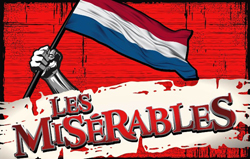
Jean Valjean, known as Prisoner 24601, is released from prison and breaks parole to create a new life for himself. He lives evading the persistent Inspector Javert, to whom the letter of the law is sacred. Set in post-revolutionary France and against the June Rebellion of 1832, Les Misérables follows the fortunes of Valjean and Javert; the tragedy of the reluctant prostitute, Fantine; and the romantic triangle of Fantine’s daughter, Cosette, the idealistic student of the rebellion, Marius, and Eponine, a street urchin.
|
Show Guidelines
Les Misérables is a sung-through musical based on Victor Hugo’s novel of the same title. The show is a drama that depicts battle scenes and characters’ struggles for personal and political freedom.
Language
Lyrics throughout the show include mature language.
The words shit, ass, bitch and the name Jesus are each used once. The words slut, whore, bastard, hell and damn are each used several times.
Violence
Much of act two takes place behind the barricades of the revolutionary students. Several characters are wounded or killed by gunfire, and the looting of bodies takes place during the song Dog Eats Dog.
Drugs/Alcohol
Alcohol is represented in scenes taking place in the Thenardiers’ establishment.
Mature Themes
Jean Valjean is a fugitive who is haunted by his criminal record and targeted by various law enforcement officials.
Desperate for money to care for her daughter, Fantine sells material and personal belongings before becoming a prostitute.
A character commits suicide.
Sexual References
Prostitution is depicted with some explicit references by prostitutes, pimps and customers.
Fantine faces an abusive customer.